Three decades after reshaping South Beach, the Delano reopens with a new vision and a global hospitality partnership betting on the city where its legend began.
Before it became synonymous with Ian Schrager and Philippe Starck, the Delano was already a Miami landmark. Designed by architect Robert Swartburg and opened in 1947 under the slogan “Nothing Finer,” it was named for Franklin Delano Roosevelt and, for a time, lived up to the association, hosting presidents, royalty, and notables within its 14 stories of clean vertical fins and subtropical geometry—an early expression of what historians would later call Miami Modern.
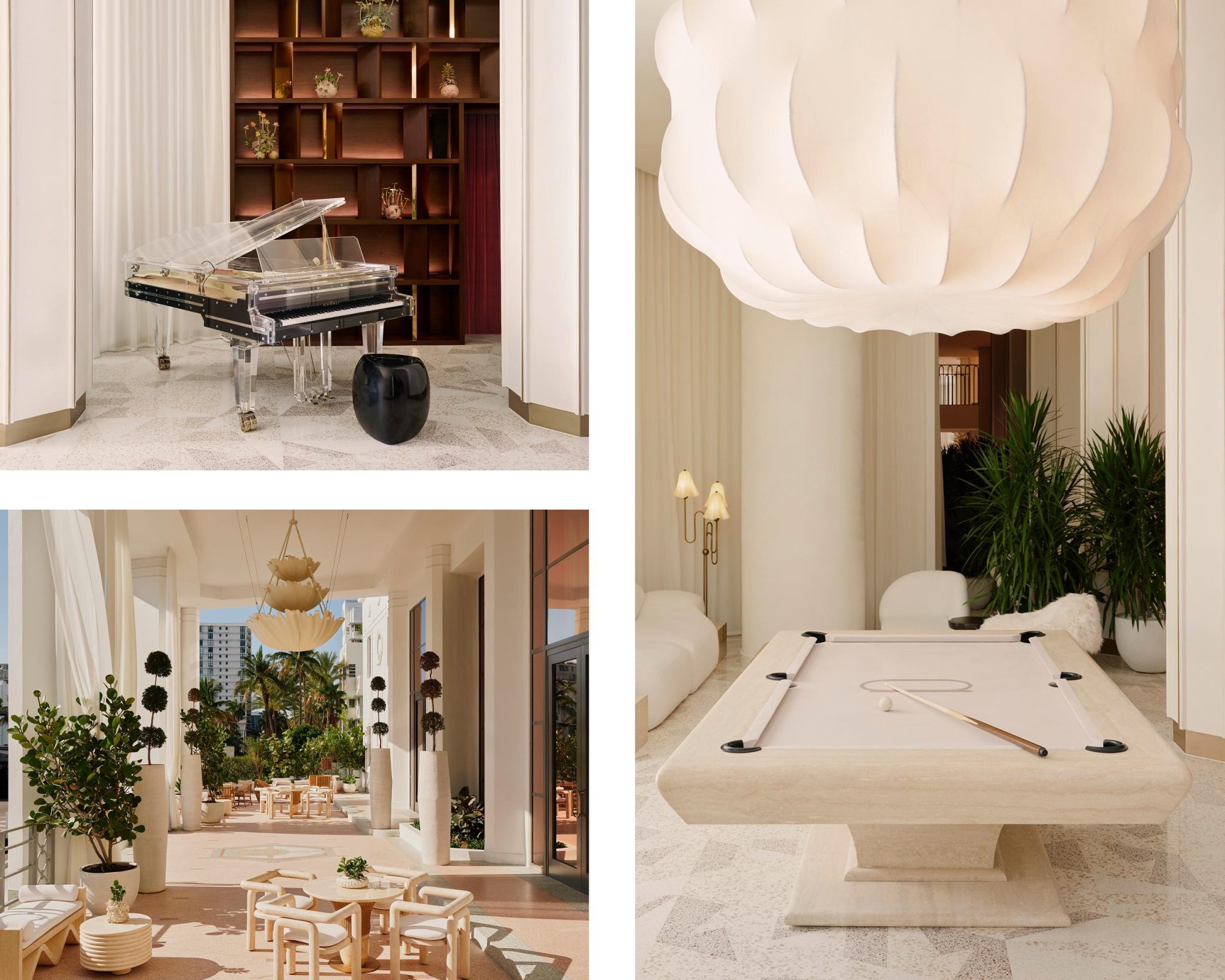
Schrager acquired the property in the early 1990s and enlisted Starck to reinvent it, reopening the Delano in 1995 with a vision that helped define the mythology of South Beach. White curtains billowed through a lobby that refused to behave like one. Out back, the long pool felt like a film set, the kind Slim Aarons might have shot. Madonna, Kate Moss, and Lenny Kravitz became fixtures; in 2007, Kravitz debuted the Florida Room, a subterranean live-music lounge anchored by a Lucite grand piano modeled after his own. In the process, the Delano helped define what the industry would eventually call the lifestyle hotel.
Then, in March 2020, it closed.
In the years that followed, Delano set out for international expansion, first to Paris and later Dubai, while confronting a larger question: what should a contemporary Delano be? That task fell in part to Ben Pundole, who joined as chief brand officer last year. “When I came on,” he says, “the role was really to align Dubai and Paris with a new, evolved Delano brand vision while remaining very attractive to a healthy development pipeline.” Three-pronged, he calls it. Not starting from scratch, but not a clean slate either. “Ian always said there’s no point being two steps ahead because you miss the market,” Pundole says. “You just want to be on the tip of anticipation.”
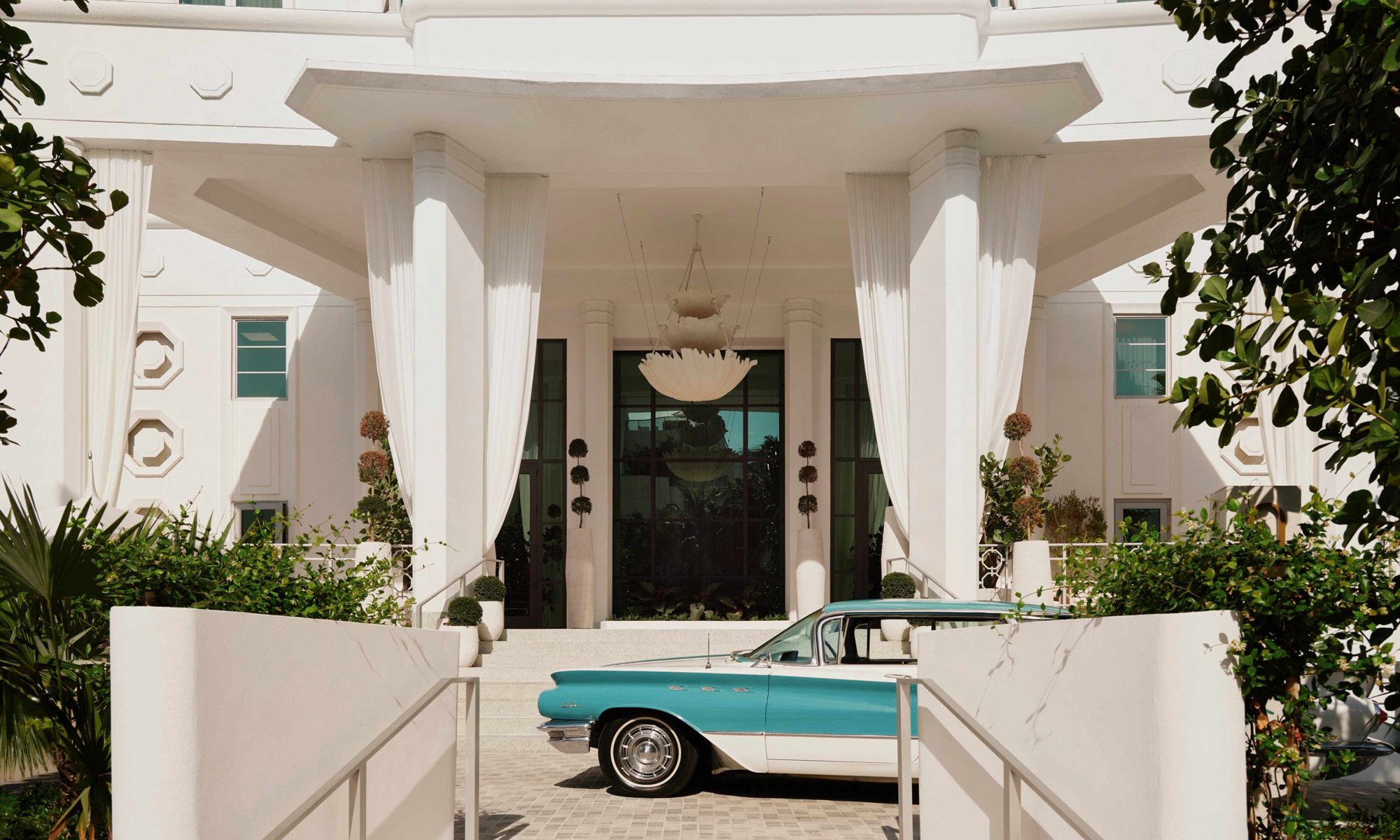
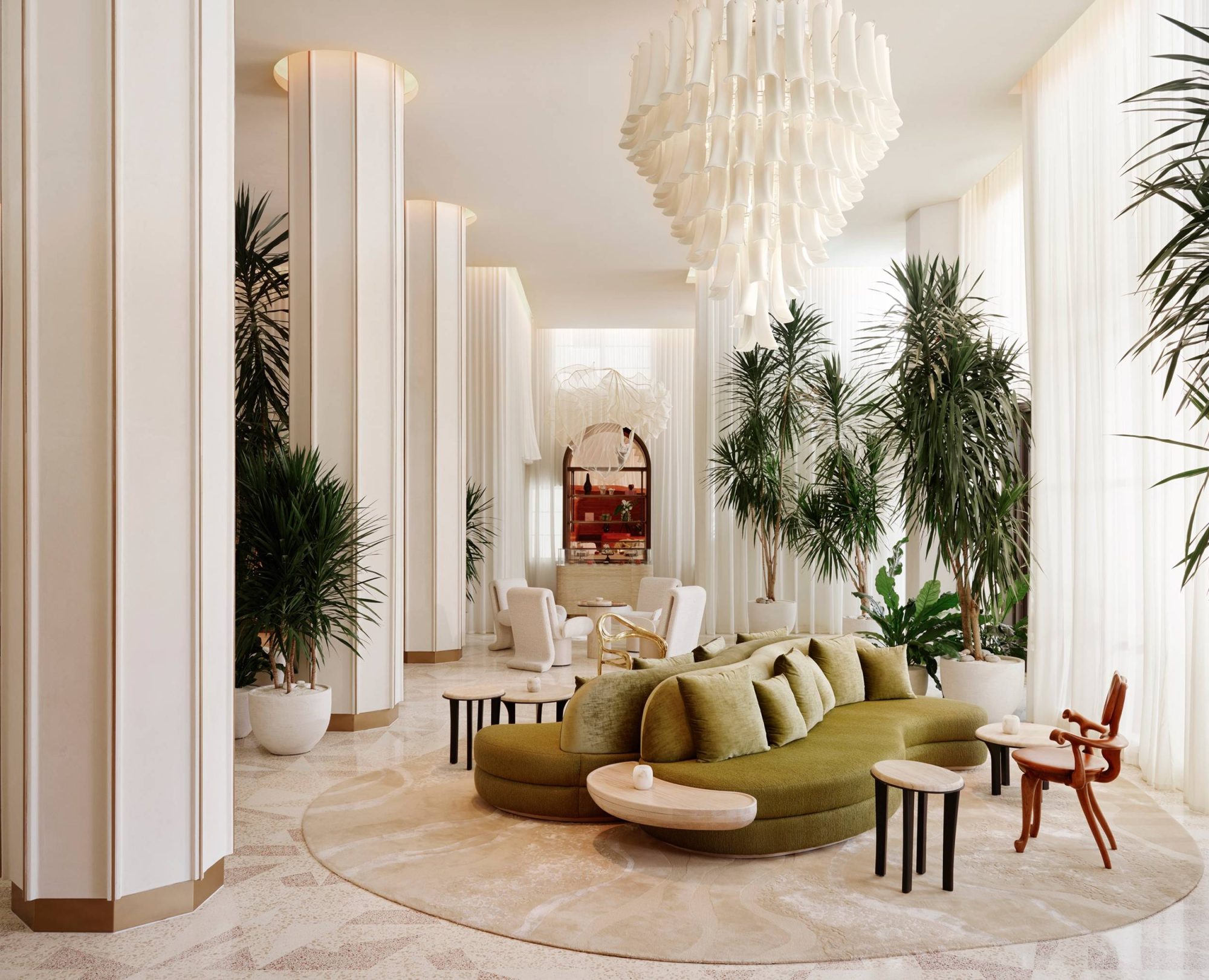
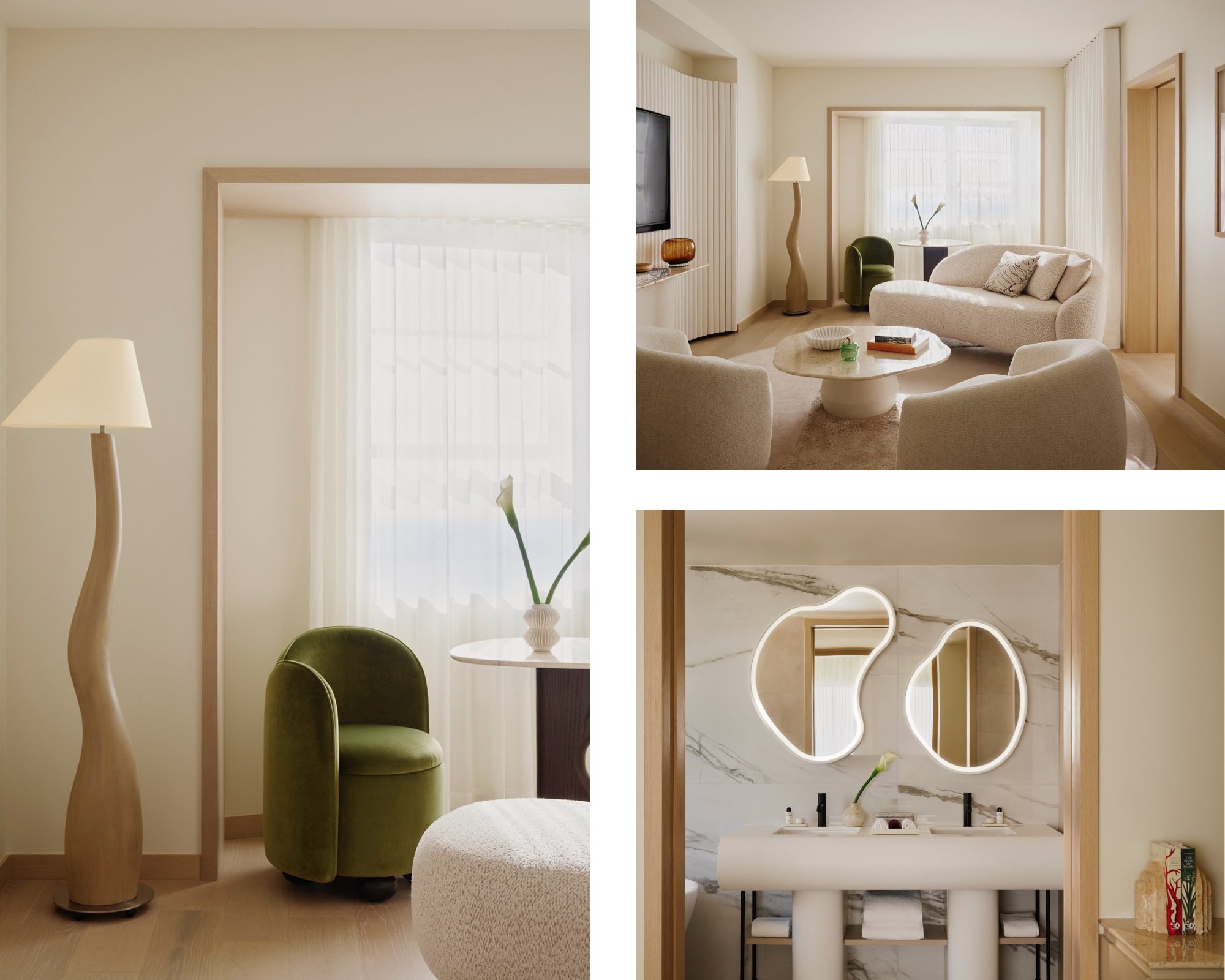
At 1685 Collins Avenue, Elastic Architects approached that inheritance with reverent precision. In the lobby, that means the reintroduction of the original terrazzo flooring, hexagonal columns, and mezzanine bridge. Familiar pieces reappear among them: the billowing white curtains, chairs by Salvador Dalí and Antoni Gaudí, restored Murano glass chandeliers, and a recreation of the Lucite piano associated with Kravitz’s Florida Room. The 171 rooms and suites, including Poolside Bungalows and two new 14th-floor penthouses that can combine into a seven-bedroom full-floor configuration, move in a quieter direction. Expansive windows, curved architectural details, and neutral palettes defer to the Atlantic just beyond them.
Delano lobby. …
Lobby details.…
Guest rooms.…
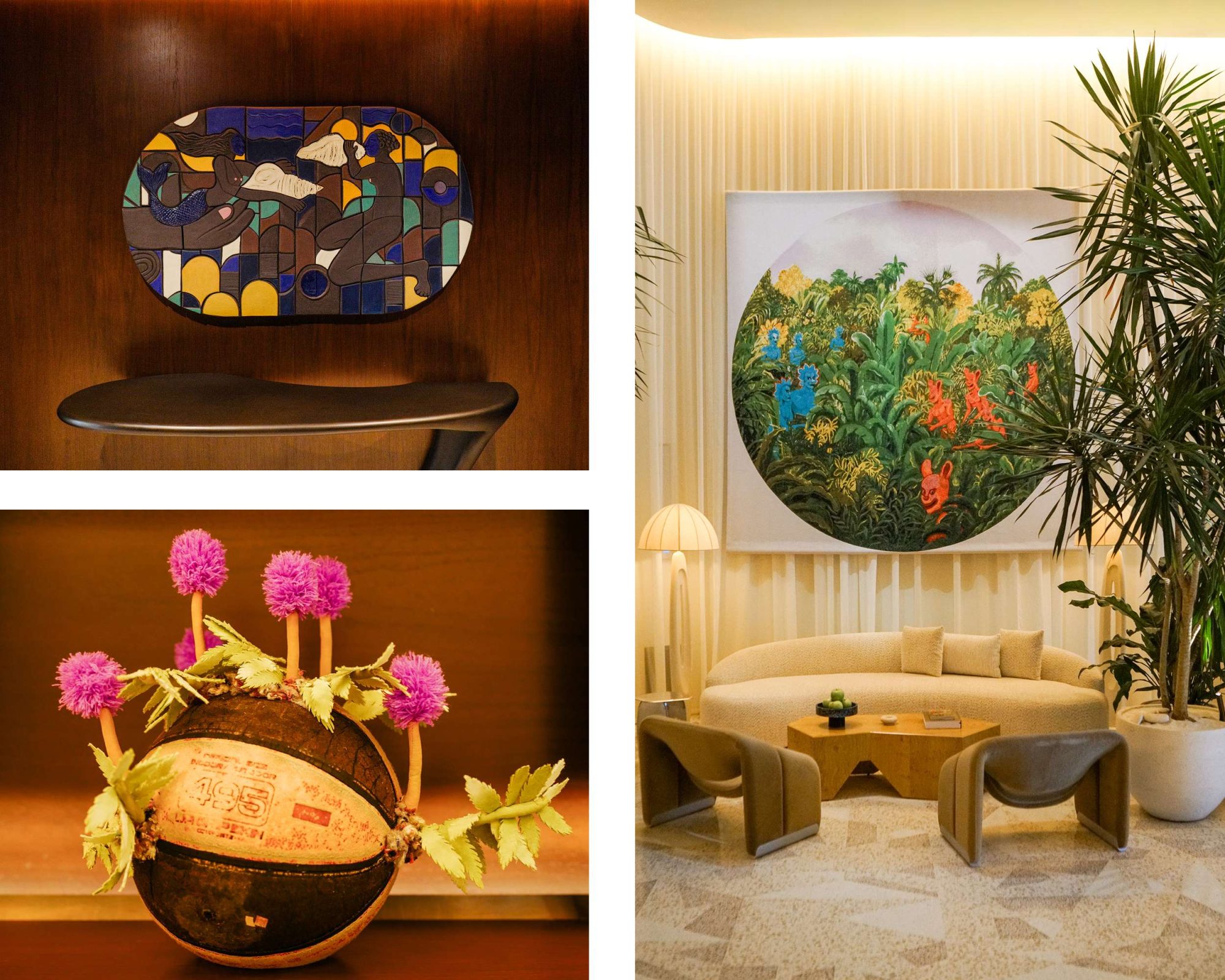
Artist and social historian Nicola Green was embedded in the redevelopment from the start, working alongside Elastic Architects to ensure the collection informed material selections, color palettes, and wall coverings rather than arriving as an afterthought. The collection is rooted in Miami: Nina Surel’s piece hangs in the lobby where her future husband once proposed to her; Edouard Duval-Carrié’s first tapestry appears nearby, months before his work heads to the 2026 Venice Biennale; Màrielle Plaisir’s Caribbean-inflected canvases sit somewhere between celebration and confrontation. Where Schrager’s Delano made its argument through design and nightlife, this one makes it through art and artists.
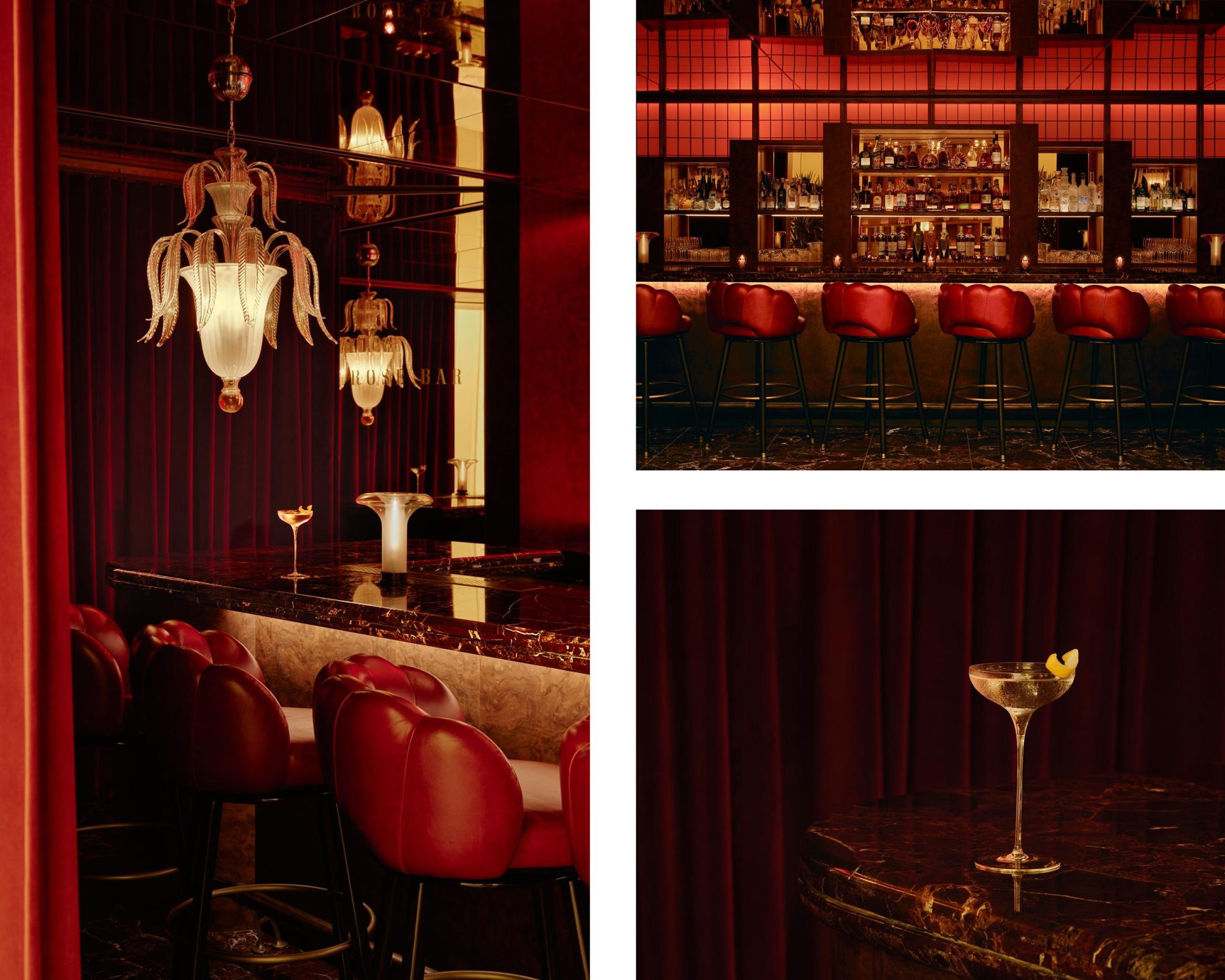
Just off the lobby, Rose Bar returns: eight seats, restored Narciso chandeliers, Rosso Lepanto marble, low-slung velvet, and a cocktail program that riffs on nightlife nostalgia without embalming it.
If Rose Bar represents continuity, the hotel’s most consequential new partnership signals ambition. Paris Society, the global hospitality group headquartered between Paris and Dubai, makes its U.S. debut at the Delano with two restaurants occupying opposite ends of the property.
Art program details. Credit Steven Rojas.…
Rose Bar.…
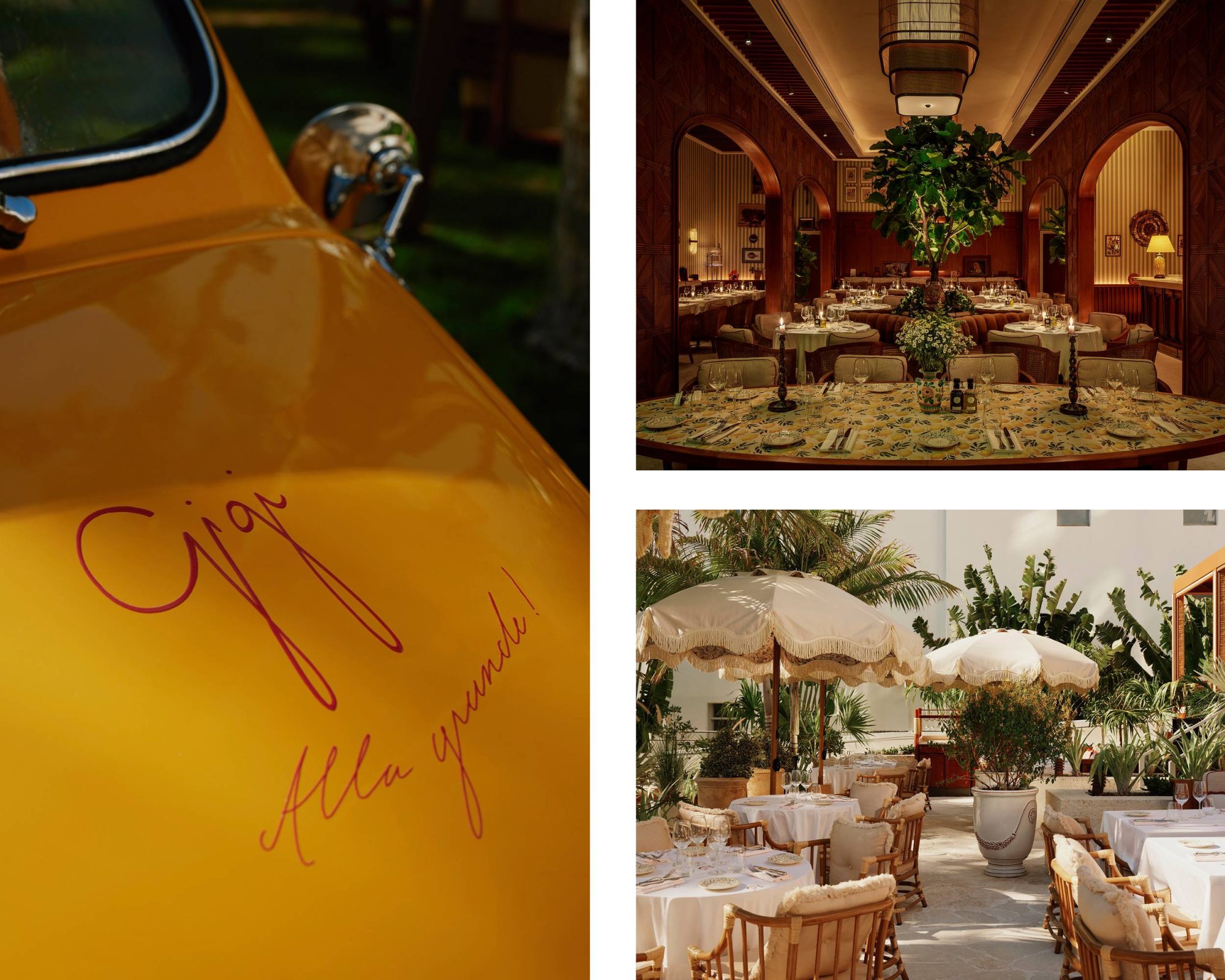
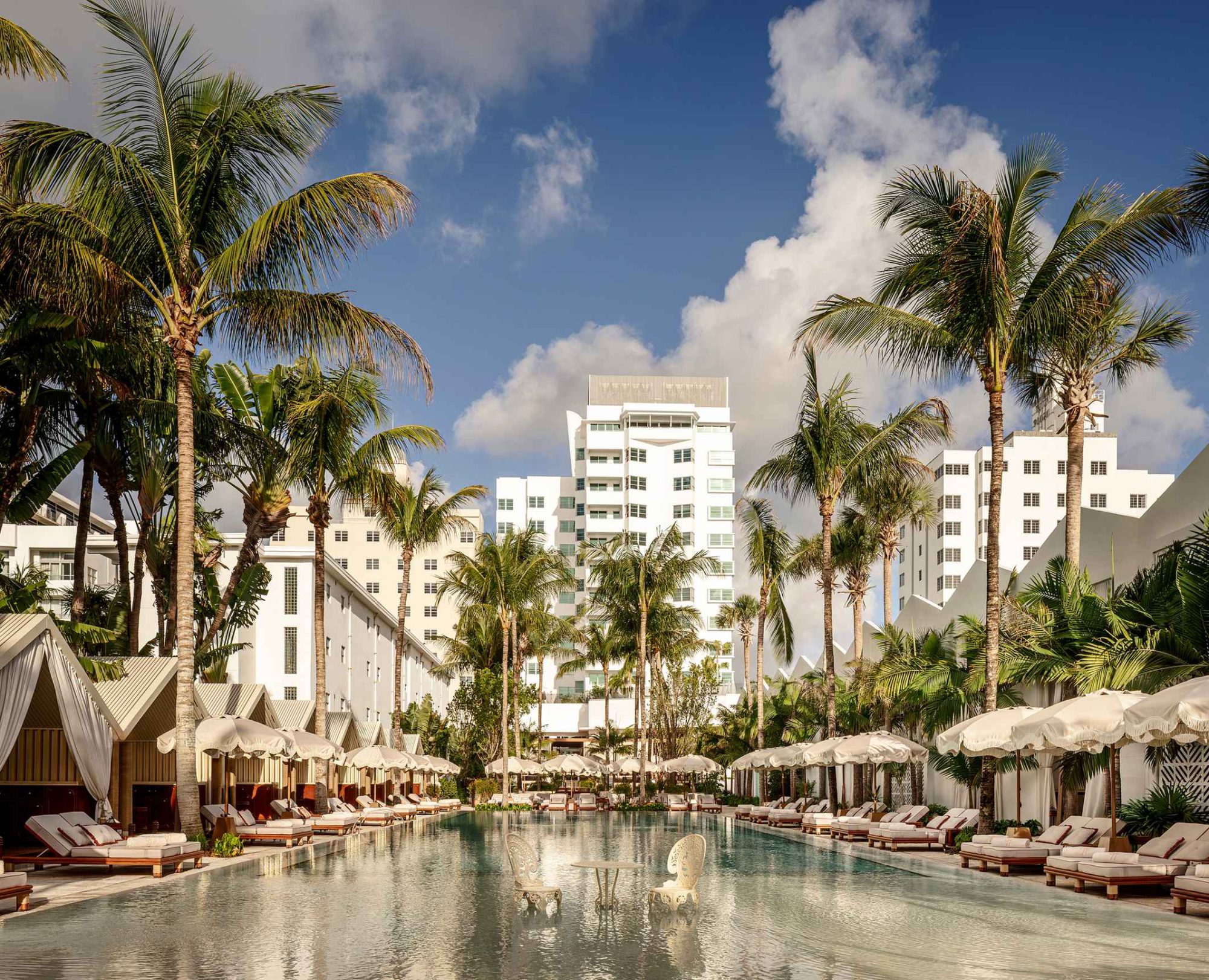
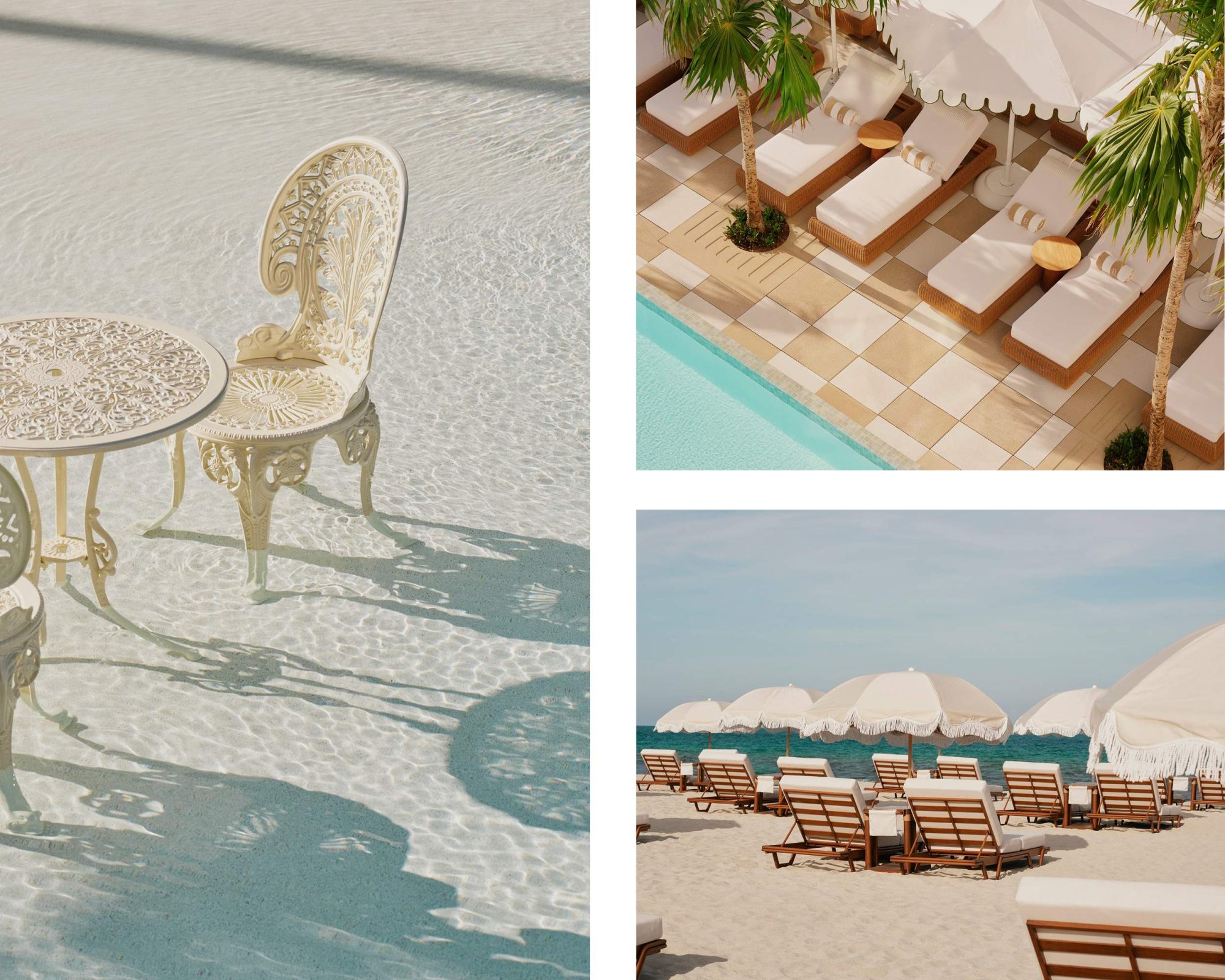
On the ground floor, the historic pool, restored to its original footprint, becomes the center of Gigi Rigolatto. After Saint-Tropez, Paris, Dubai, Rome, and Bodrum, the Italian concept arrives at its first American address. Franco-Mexican architect Hugo Toro oversaw the design direction, with Elastic Architects executing a sequence of indoor dining, terrace seating, poolside tables, beach cabanas, and sunbeds unified by carved wood, Siena marble, travertine, pale coral stone, and greenery.
“You can come to Gigi three times in one week and have three different experiences,” says Rizwan Kassim, CEO of Paris Society. But importing a hit is different from building one in Miami—and Kassim knows that reputation travels only so far. “My focus is to make sure that we can adapt to the local taste, to what the Miami resident wants,” Kassim says. “The local resident is the base of the business.” The menu, overseen by corporate executive chef Giuseppe Pezzella, moves through handmade pastas, grilled seafood, and Italian classics recalibrated for Miami.
Gigi Rigolatto. Credit Kris Tamburello.…
The Delano pool.…
Main pool, members only, and beach.…
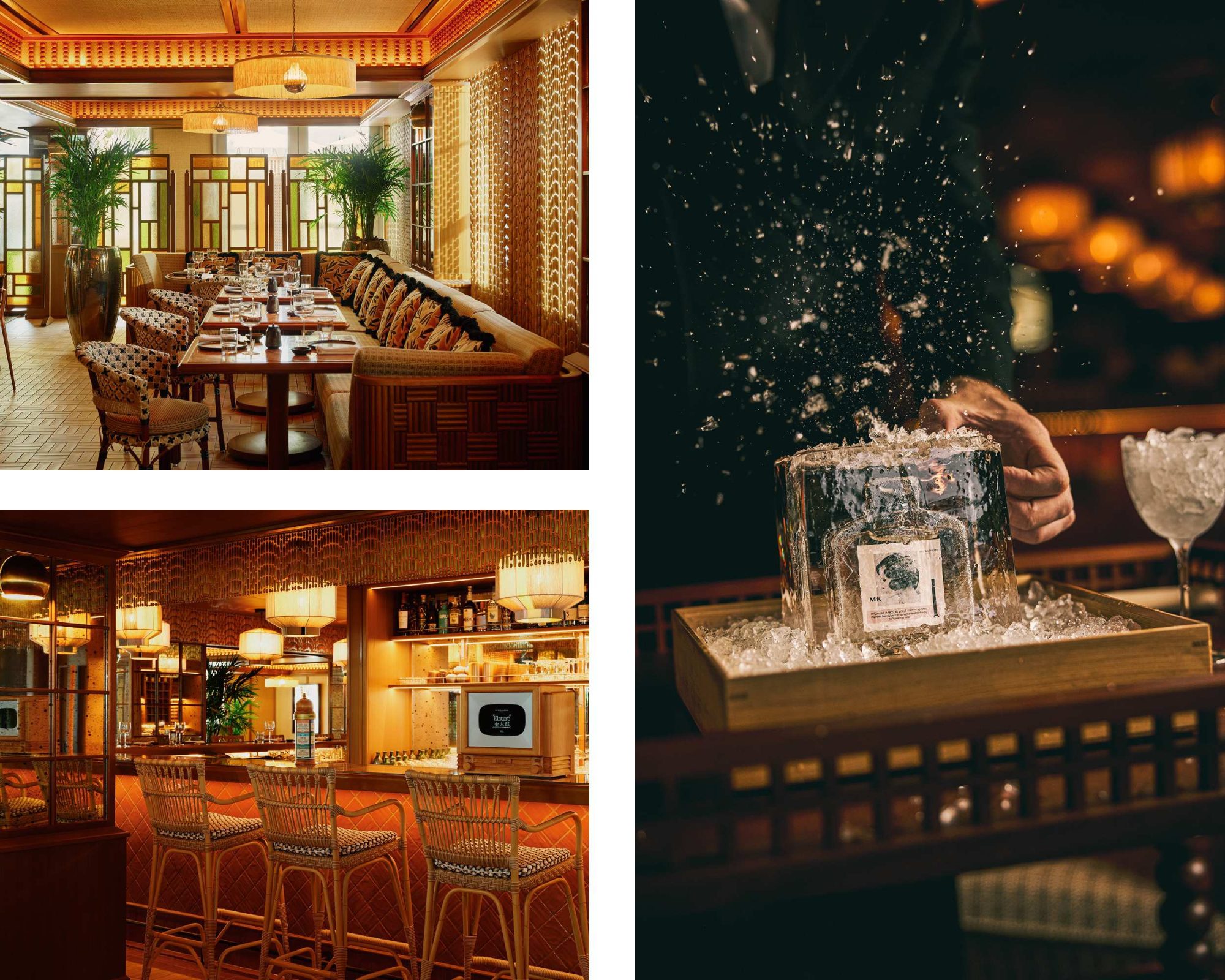
Accessible exclusively to hotel guests and Delano Members Club members, the fourth floor houses a private pool, a Technogym Artis fitness studio, and Mimi Kakushi, Paris Society’s Japanese concept inspired by the creative underground of 1920s Osaka. The club launches with 200 founding members, shaped with guidance from a committee spanning art, film, fashion, music, business, and technology.
London-based Pirajean Lees collaborated with Elastic Architects on the interiors of Mimi Kakushi. Wooden screens and hand-painted walls set the scene, while music and scent extend the atmosphere beyond the visual. Its Kintarō cocktail menu takes Japanese silent-film icon Sessue Hayakawa as its inspiration, with each drink named for one of his roles. The most theatrical: the Nara Nara, a Botanist gin martini presented within a block of ice at minus four degrees Fahrenheit.
Mimi Kakushi.…
Nothing Finer, the hotel’s retail concept, takes its name from the Delano’s original slogan, stocking a curated edit from independent brand Chez Dede alongside the hotel’s signature scent.
For 25 years, the Delano was a stage onto which Miami projected whatever version of itself it wanted that night. The new Delano is attempting something slightly more difficult: an international brand that doesn’t become placeless, a private club that doesn’t withdraw from the city, a historic hotel that remembers its greatest hits without performing them forever. Whether it can hold all of those contradictions will determine what “Nothing Finer” means this time around.