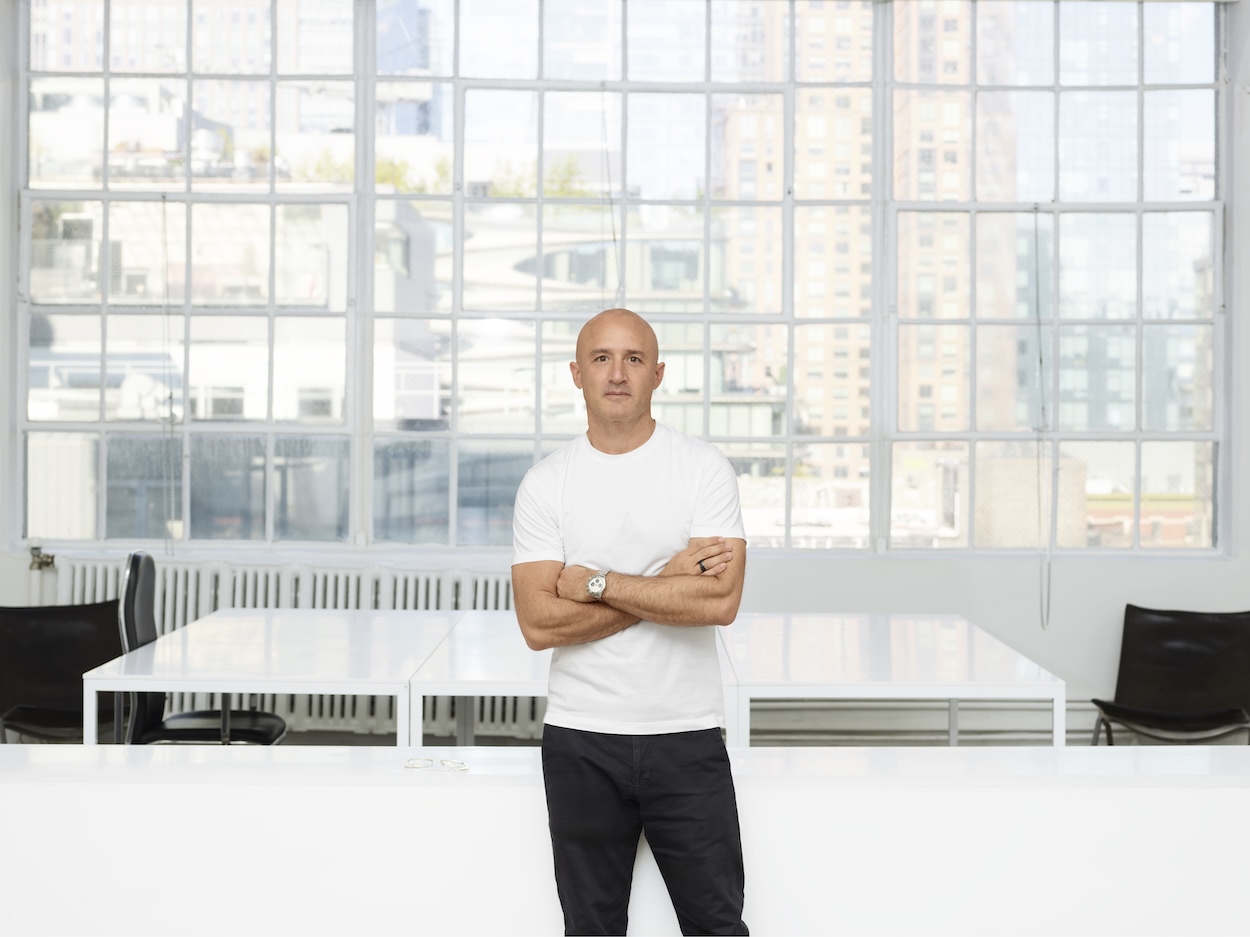
Andrew Zuckerman has spent much of his career exploring the relationships between people, ideas, technologies, and the natural world. Birds, flowers, animals, cultural figures—his subjects are often familiar, but under his exacting eye, they become strange again, stripped of context and forced into sharper attention.
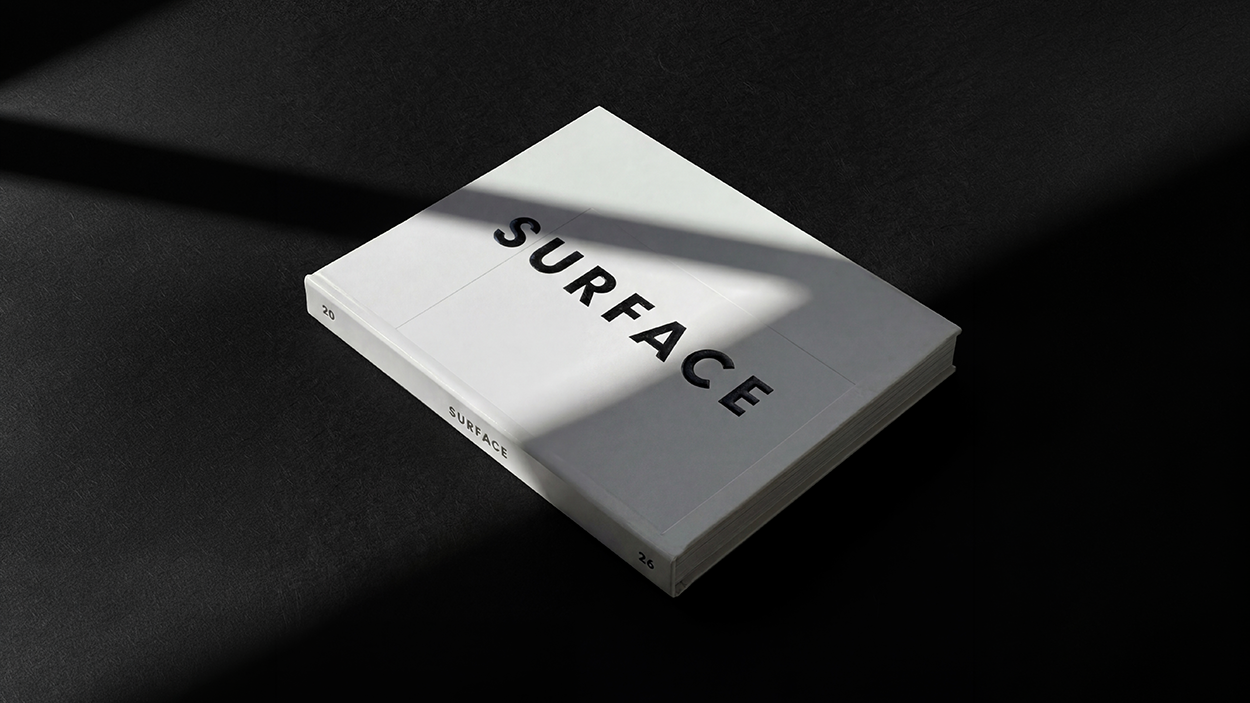
That impulse carries through the new limited-edition Surface 2026, the magazine’s first hard-cover annual exploring the developments shaping the next century. Rather than treat design as a world of objects, buildings, and beautiful things, the book considers design as a way of reading civilization itself: lunar data centers, regenerative gastronomy, artificial intelligence, material science, de-extinction, and the increasingly porous line between nature and technology. Featuring interviews with everyone from Bjarke Ingels to Robert De Niro to Max Verstappen, Surface 2026 is a cross-disciplinary time capsule of a society at an inflection point.
We sat down with the book’s guest editor for a conversation about taste as a form of intelligence, A.I.’s relationship to nature, and dire wolves.
By Maya Zuckerman…
In your editor’s letter, you say design has never been merely about objects or buildings. The book takes on enormous subjects, from space exploration and life extension to regenerative food systems and artificial intelligence. What’s the common thread?
I’ve never been an editor, but my career is about looking closely and trying to understand how things connect. The old disciplinary categories we’ve relied on don’t describe reality anymore. They’ve all broken down. When we stop treating people, nature, technology, and ideas as discrete categories and we start looking at the relationships between them, we understand the world better. Design is not a narrow discipline; it’s connective tissue.
What’s your take on the taste discourse?
Taste is reemerging as a word because of frontier models and the notion that we can now make anything. Silicon Valley’s approach is, “Oh, let’s just put some taste in here,” but taste isn’t something that you just inject or adopt. You don’t have taste because you go to art galleries or read a design magazine. Taste emerges from a broad experience of life. It’s the cumulative result of what you accept and reject across many domains.
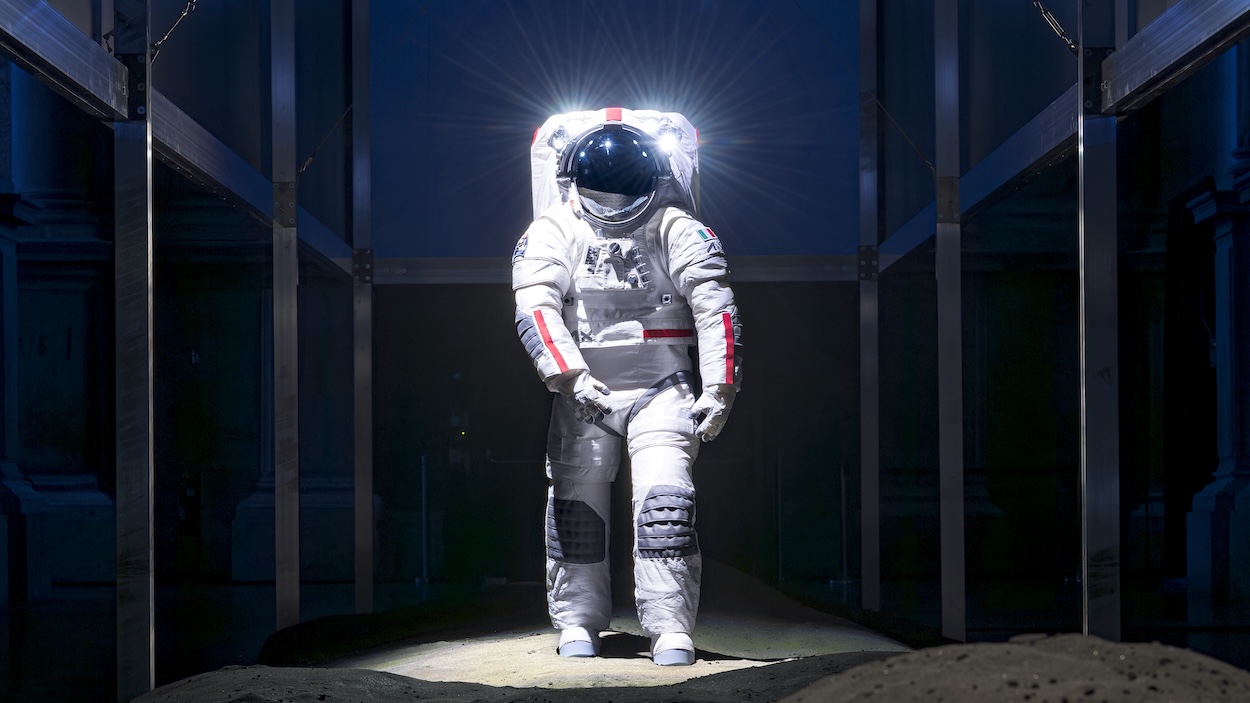
Prada and Axiom Space during The Final Frontier — Venice, an event by Type One. Image courtesy of Prada / Axiom Space…
Next year, Artemis III astronauts will launch into orbit wearing Prada x Axiom spacesuits. What discoveries lie at the intersection of fashion and science?
I love when unlikely collaborations come from authentic processes. I went to Axiom’s Houston headquarters to see the suit, and no one in that room was wearing Prada. No one was focused on the brand. So I asked, why Prada? Because of the material. Their nylon, their looms. Oftentimes, we don’t understand that fashion houses have done deeply innovative work for so long in their own domains that it can translate to other domains. This wasn’t a marketing exercise; the space industry needed Prada to achieve this.
In such a transactional world, it's nice to do something for no great reason other than to do it.
In Dan Barber’s reflections on Blue Hill at Stone Barns, he writes that the restaurant’s early mission reinforced a false trade-off between taste, nutrition, and accessibility. Is there a similar false trade-off within the design world?
We think of design as an applied art or the practice of injecting new objects and solutions into the culture, which is a false assumption. True design is similar to the way the natural world behaves. It unfolds. It’s the act of following a curiosity, thinking about and diagnosing the current moment—not just its problems, but all its phenomena.
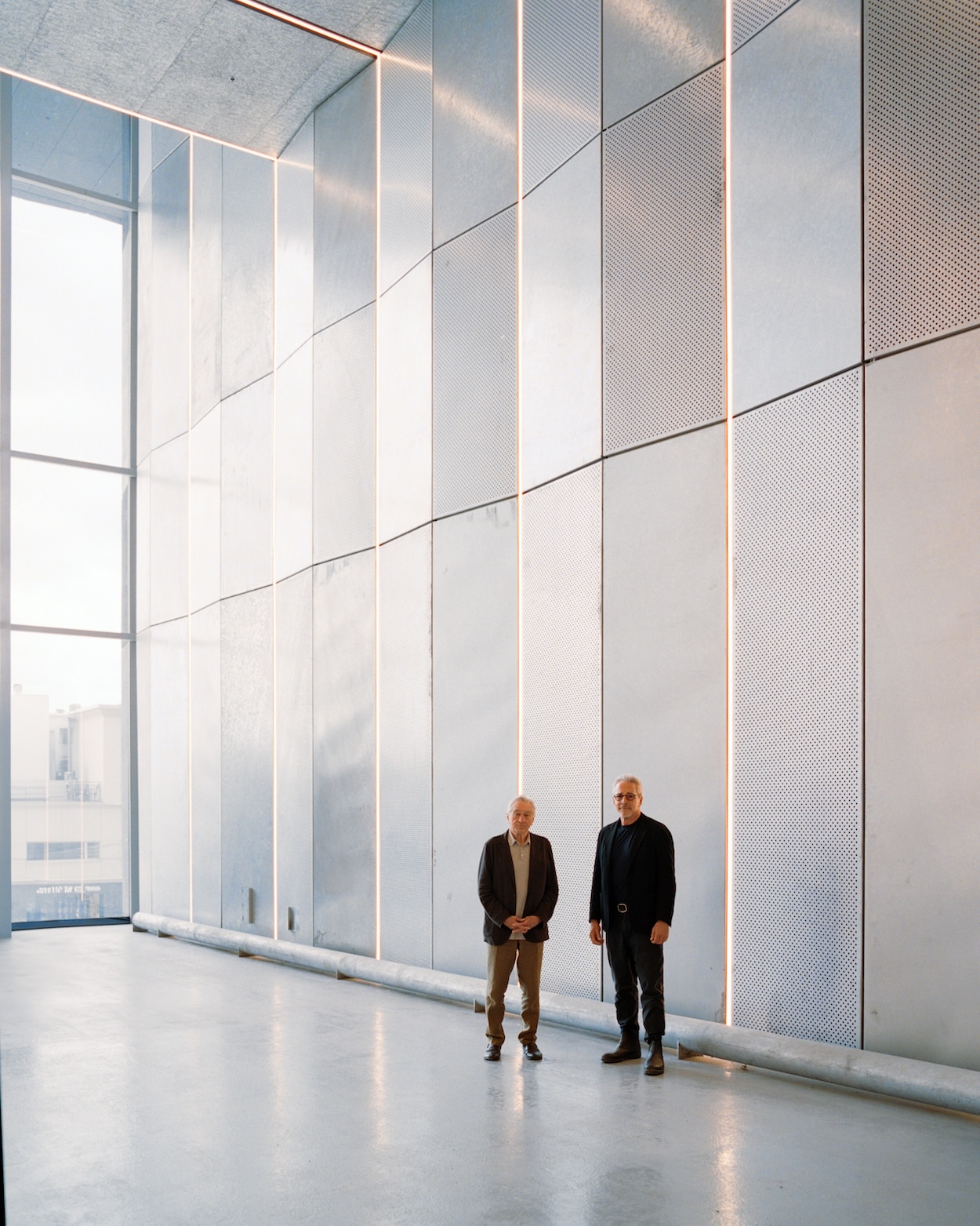
In the piece about Robert De Niro and Adam Gordon’s Wildflower Studios, Gordon discusses the project within the framework of a hero’s journey. Is there a principle or philosophy that guides your own practice?
I love that Adam came up with that. I’ve been very involved in that project from day one, and he really does consider the space a theater for humans to live out their own journeys. In my work, I engage with a lot of philosophers and anthropologists. The most impactful one recently has been Baptiste Morizot. His book Ways of Being Alive is beautiful. He talks about a crisis of sensibility: the idea that we no longer have access to the full breadth of our senses, or that the forces of the world are narrowing them. It’ll make you walk through the day differently. It makes me check myself to ensure that I’m seeing things clearly, with all senses—it’s more than visual or sonic.
By William Jess Laird…
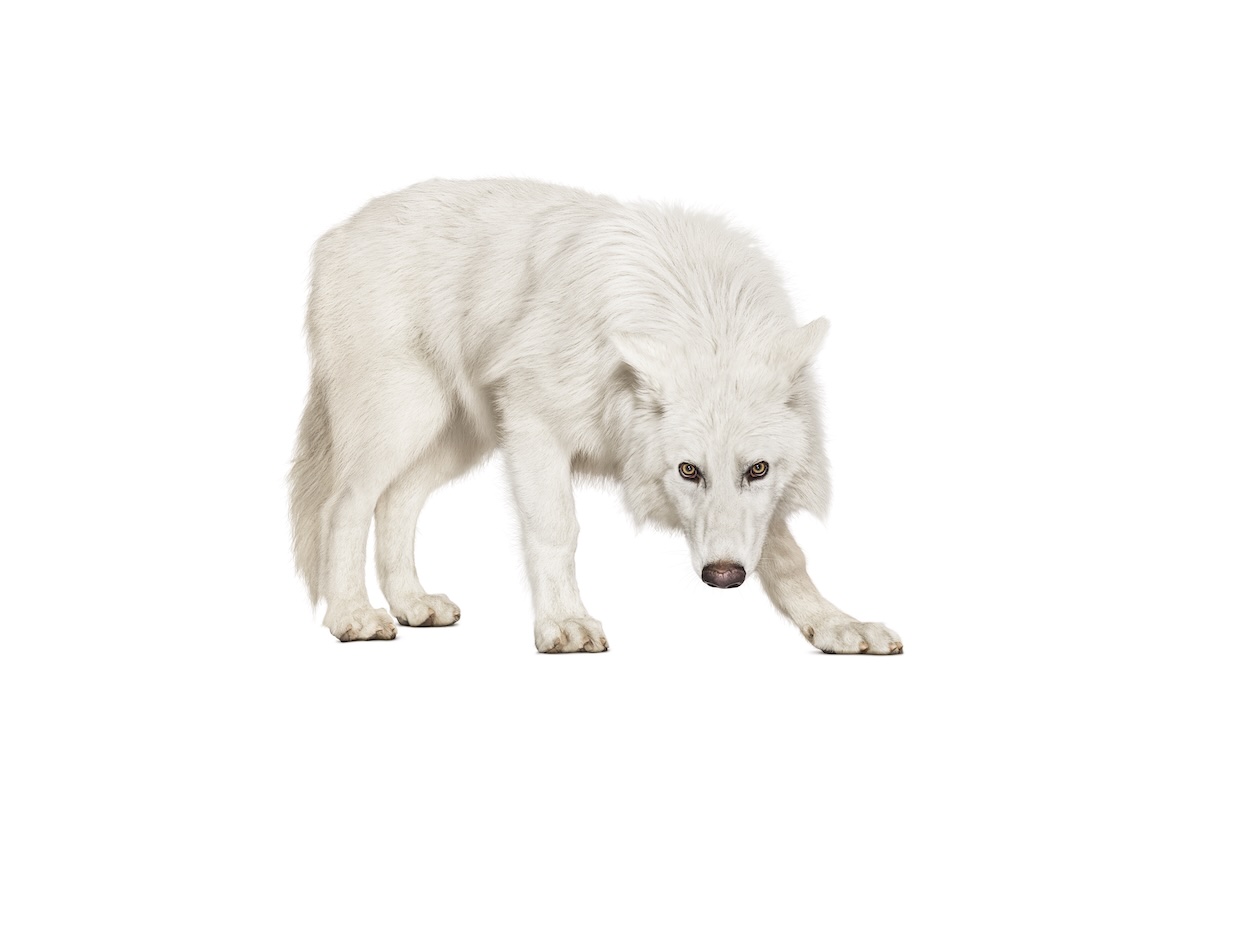
You visited Ben Lamm’s Colossal Biosciences’ de-extinction lab and met the dire wolf they created using CRISPR. Is bringing species back from extinction a good idea? Should there be boundaries?
We run into trouble when we think this way about interacting with nature. It’s a puritanical, faith-based notion of ethics. Is it ethical to pull uranium from the earth to power a data center? To draw energy from the sun? The great powers we have to destroy can also be great powers for creation. This dire wolf is an artifact of a groundbreaking scientific development that’s invisible to us. It’s going to make CRISPR a household name, and that’s critical.
Are you an A.I. optimist or fatalist?
There’s a narrative around A.I. as an alien force that’s going to threaten our sense of agency. But every time we’ve developed a tool, it’s been directly related to the natural world. We picked up a rock 3.2 million years ago, and now we’ve taught sand to think. A.I. is actually enabling us to have deeper insights and to be reminded that biological intelligence far exceeds silicon-based intelligence. I believe the great promise of A.I. is bringing us closer to nature.
By Andrew Zuckerman…
What are you reading right now?
I’m thinking a lot about how language shifts and defies perception, and Andri Snær Magnason does it incredibly well in On Time and Water. He talks about glaciers and human life, but he never says the words “climate change.” It’s a totally different way of accessing the same information.
What does print still offer that digital does not?
There’s a certain vitality to digital. What we hold and have an embodied experience with has potential and possibility beyond the moment. Physical images are about stopping time. You can’t look at an Ad Reinhardt painting and see anything but black until the cones in your eyes shift after a couple minutes. Taking the time to look at something isn’t common today.
Surface 2026 isn’t for sale. It’s only being gifted to select individuals. Why is putting it in the right hands more important than making a profit?
In such a transactional world, it’s nice to do something for no great reason other than to do it. There’s a purity to it. That’s why we started the project—to very humbly, very quietly, very generously offer a new perspective to the design community. Hopefully, people can pick it up in 20 years and have the same sense of wonder about human capability and creativity, even though the technologies will be household names. The book isn’t about the specific outputs; it’s about the drive to get somewhere new.