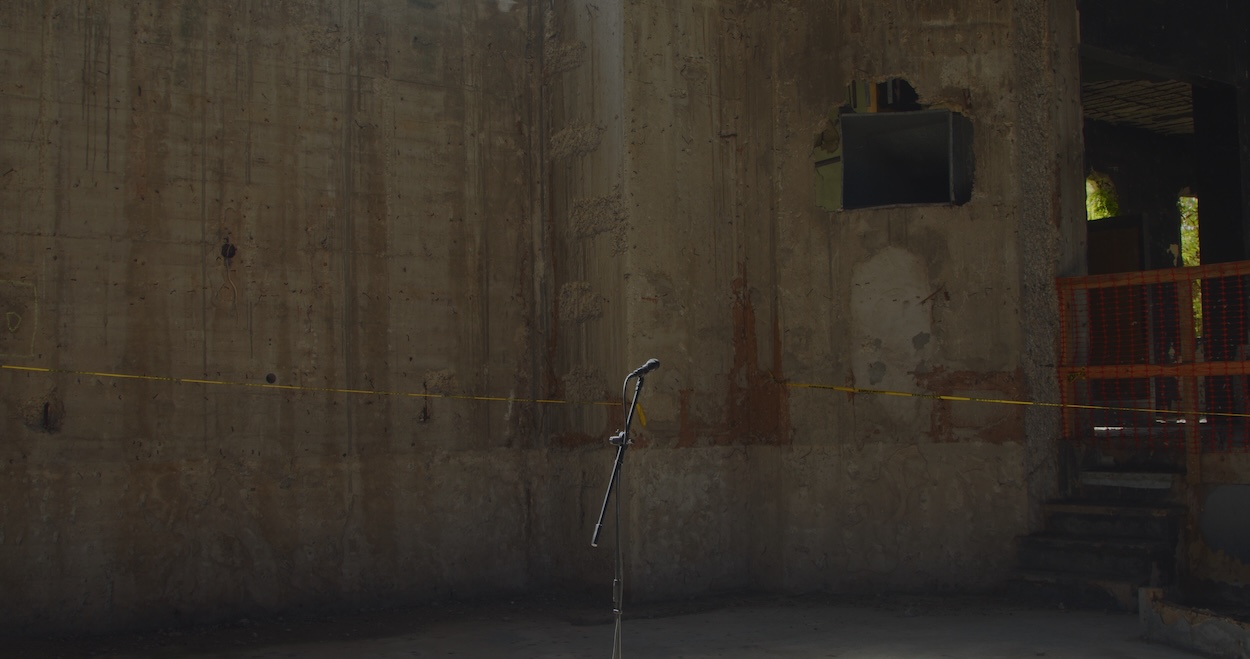
“My intention for this process was to use theatrical rehearsal as a way to collectively embody memory,” says Natalia Lassalle-Morillo, the Puerto Rican director behind “En Parábola/Conversations on Tragedy,” the culmination of nearly eight years of work on Sophocles’ Antigone. The project began in 2017, when Hurricane María struck the island shortly after Lassalle-Morillo moved to California for graduate school. Watching the aftermath from afar, she turned to Greek tragedy at her mother’s suggestion and found in Antigone a story about “taking agency over who—and what—is remembered.”
Developed through a two-year residency between Abrons Arts Center in New York and Pública in San Juan, the work brings together two ensembles of mostly first-time performers, one in the diaspora and one on the archipelago. The New York group centered on migration and displacement, imagining an Antigone who flees Thebes for New York. The Puerto Rican ensemble focused on death, from the loss of natural resources to the broken promises of progress. Alongside two films, the accompanying exhibition includes embroidery, prints, and a soil sculpture developed with co-creators Emma Suárez-Báez and Fiamma Seda, tracing a process the artist describes as moving “at the speed of trust.”
Lassalle-Morillo speaks with Surface about the project’s development, working with first-time performers, and how rehearsal can reshape the way we think about history.
Courtesy of the artist.…
How did Antigone become the building block for this project?
I have to go back to September 2017. I had just moved to California when Hurricane María struck Puerto Rico. I found myself living a very strange diasporic experience, watching the aftermath of Hurricane María unfold from a distance. I was feeling a profound level of grief. My mother, who was in Puerto Rico, told me: “I think this is a good time for you to start reading Greek tragedies, because this feels like a Greek tragedy.”
I engaged with the Greeks, and, of course, Antigone, was the one that stuck with me. Despite being over two thousand years old, this tragedy felt familiar and relevant: it’s about a family, and a city, Thebes, and its people, trying to make sense of their lives after catastrophe. The play reminded me of what was taking place in Puerto Rico.
You developed the work with two ensembles, one in Puerto Rico and one in New York. Where did their interpretations of the myth converge, and where did their different relationships to home become most apparent?
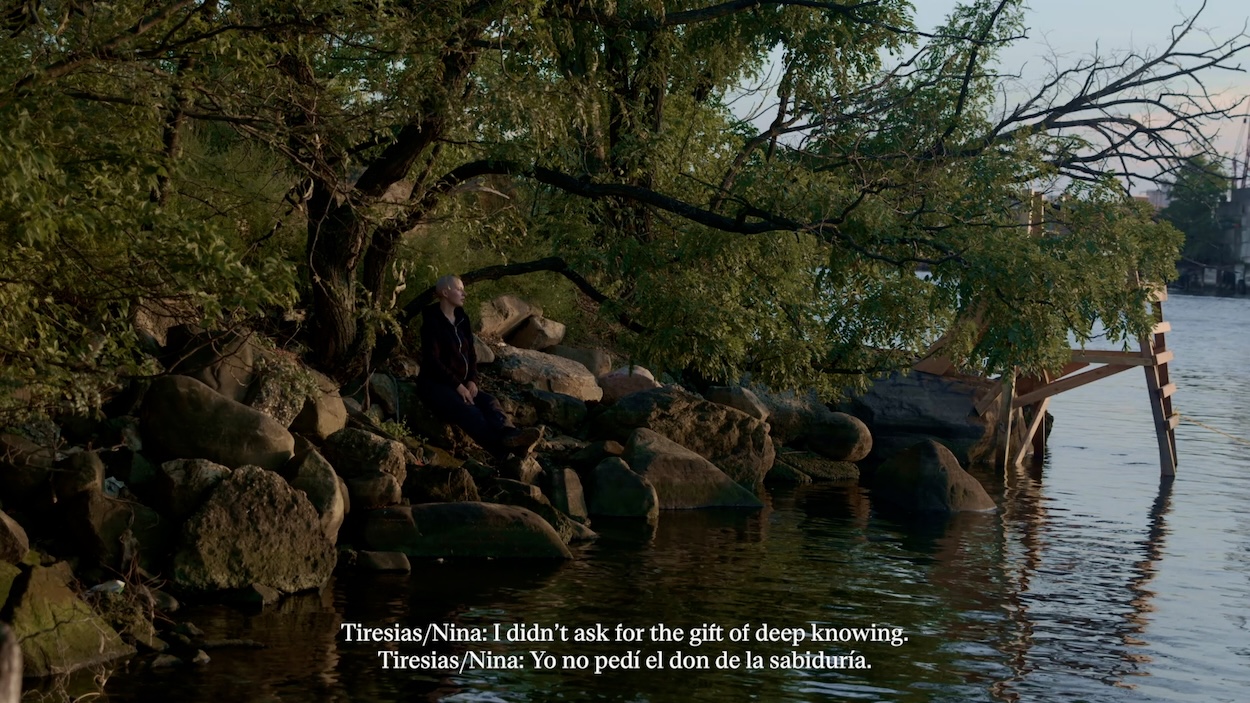
The ensemble in New York City was thinking directly about their experiences of migration and the feeling of uprootedness that results from displacement. For example, Emma, who reimagined Antigone in the New York-based ensemble, decided that Antigone survives the tragedy and flees from Thebes to New York City, to reinvent her life after the continuous tragedy she experienced in Thebes.
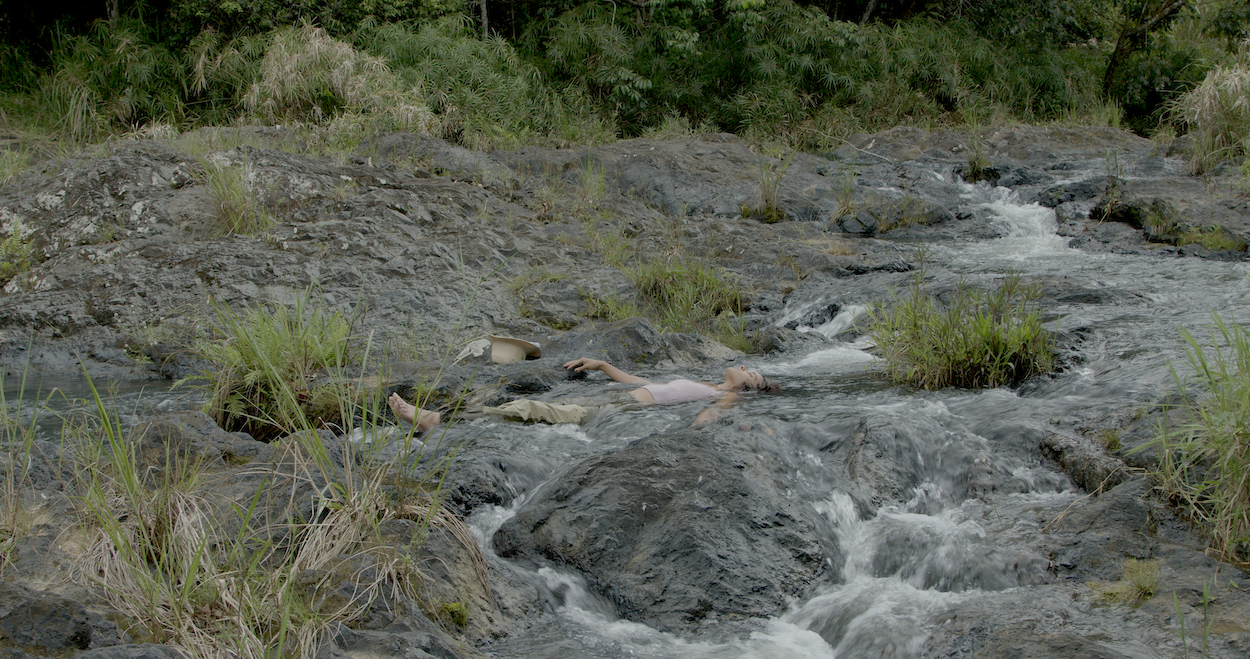
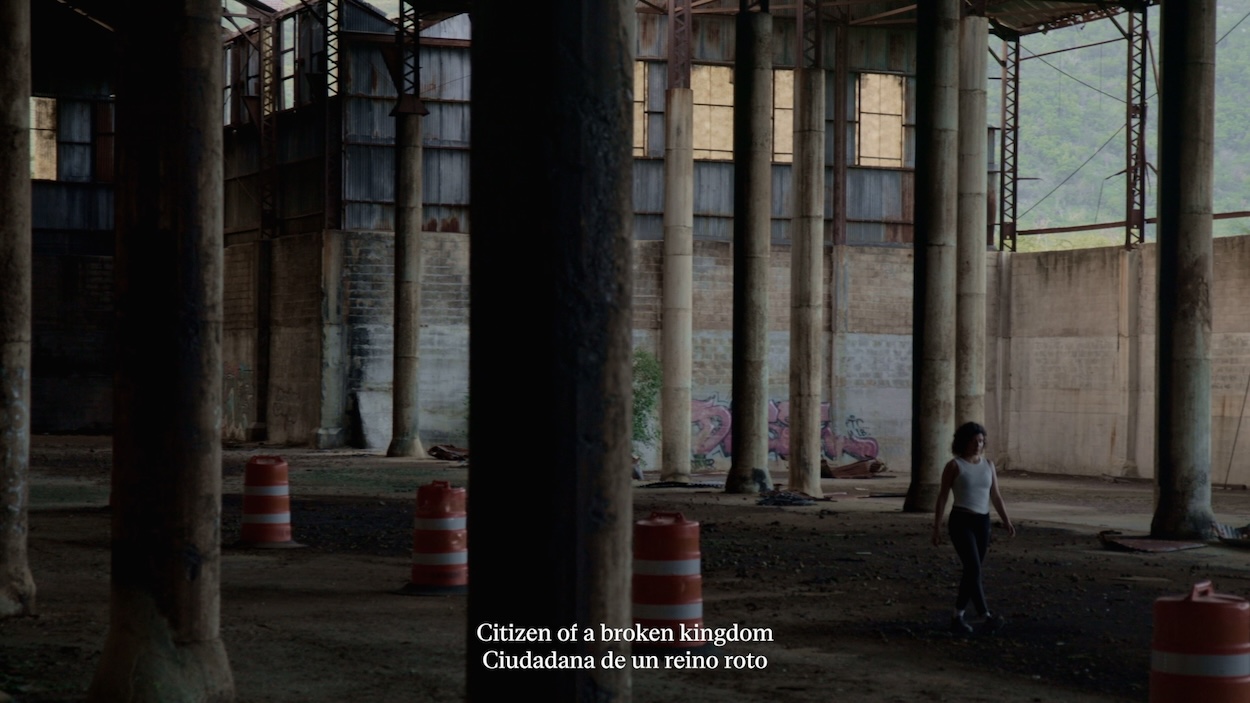
In the Puerto Rican ensemble, Yulianna decided to engage Creon, Antigone’s uncle and the play’s tyrant, which for me is an extremely difficult and daunting task. How do we engage with this character without redeeming it or turning it into a caricature? We decided that the only way she could embody Creon was to ruin Creon, to embody them until they disintegrate in the ruins they have created. It was a difficult task but we felt it was worth taking the risk for. If I were to think of convergences, both my collaborators in both ensembles imagined that Antigone and Ismene survived the tragedy.
Courtesy of the artist.…
How did you understand your role as a director when working with people who had never acted before?
My role in this project is one of a facilitator and a companion. The foundation of this project is relationships, and building trust and effective intimacy amongst all of the collaborators. For most of them, this is the first time they have performed, acted, or participated in a collaborative theater process, and so much of this process is allowing yourself to be seen and witnessed by others. My role is also to provide them with tools. Performance is very intense and sacred and if they are going to be becoming these characters every week in rehearsal, they need tools to reach those heightened states and also to bring themselves back. There’s no formula and I find that every collaboration needs a different dynamic because everyone offers something different, so my role truly fluctuates with everyone.
The exhibition extends beyond film into embroidery, prints, and sculptures. How did you and the ensemble arrive at these forms and what could they express that the films could not?
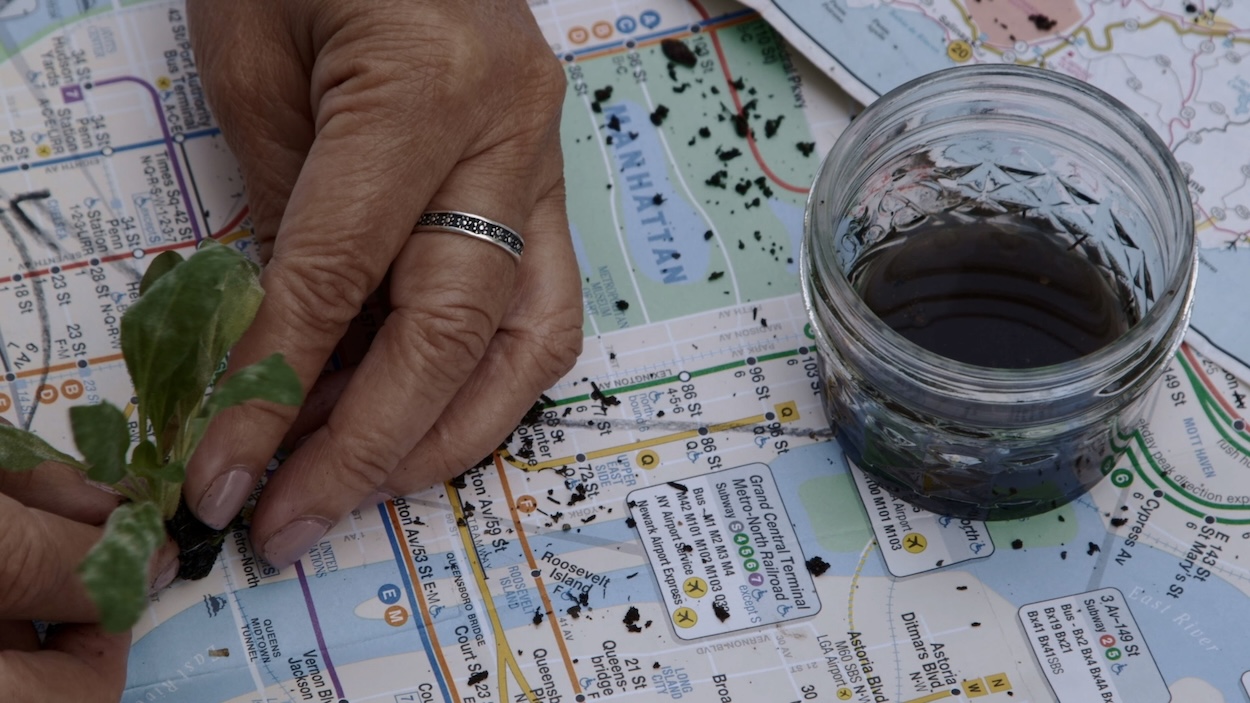
The anchor of this project is its collectivity and collaboration. I view the exhibition in the gallery as a dramaturgical exhibition, and the pieces that accompany the film in the exhibition intend to trace almost eight years of thinking about Antigone with others, from my mother, who was the first person I engaged on this exercise with, to my collaborators in New York City, to those in the archipelago, but also to the broader network of people who have been part of this process and who have lent their voices to it. The works in the gallery intend to narrate the process that is not present in the two films in the gallery, but also to expand the process into other mediums. The embroidered piece and the soil sculpture, for example, were ideas born from conversations with Emma Suárez-Báez and Fiamma Seda, co-creators of the films. The soil sculpture was also born from a conversation between Fiamma and myself, and relates directly to her interpretation of the character of Ismene, who in her reimagination, survives the tragedy and moves to the countryside to work and grow the land.
Courtesy of the artist.…
What did working between Abrons and Pública over two years allow you to try, reconsider, or start over? How did the residency affect your relationships with the cast in both places?
This project began in 2017, with a first iteration that I developed in collaboration with my mother, and in 2022 I had the opportunity of developing the New York phase of the project through a residency and a commission at Amant in Brooklyn. But from the very beginning of the project, my dream and my intention were to develop this process in Puerto Rico, and the residency with Abrons and Pública not only allowed for me to bring the process home, but also allowed for a certain itinerancy between New York and Puerto Rico which aligns with the spirit of our collaborations. This process also needs to move at a slower, more intentional pace (it has to move at the speed of trust, too), so having a longer period of working allowed us to respect this pace.
Do you feel the process of rehearsal changed how you and the cast thought about history and how it’s told?
When you look at history through the lens of theater, you begin to understand how history is, in some ways, fiction. It is written, constructed, and formulated. History can also be an invention, and, in many cases, it is. We are all playing roles in the staging of history. I think of rehearsal as a site that we can all inhabit, a way of rethinking how we connect to our contexts, our histories, and our memories. When you make a film, you typically write a script, establish shooting days, and then film it. But for me, it was important that my collaborators and I spend months meeting every week, encountering one another and the play each time, and rehearsing the ways in which we wanted to rewrite these characters.